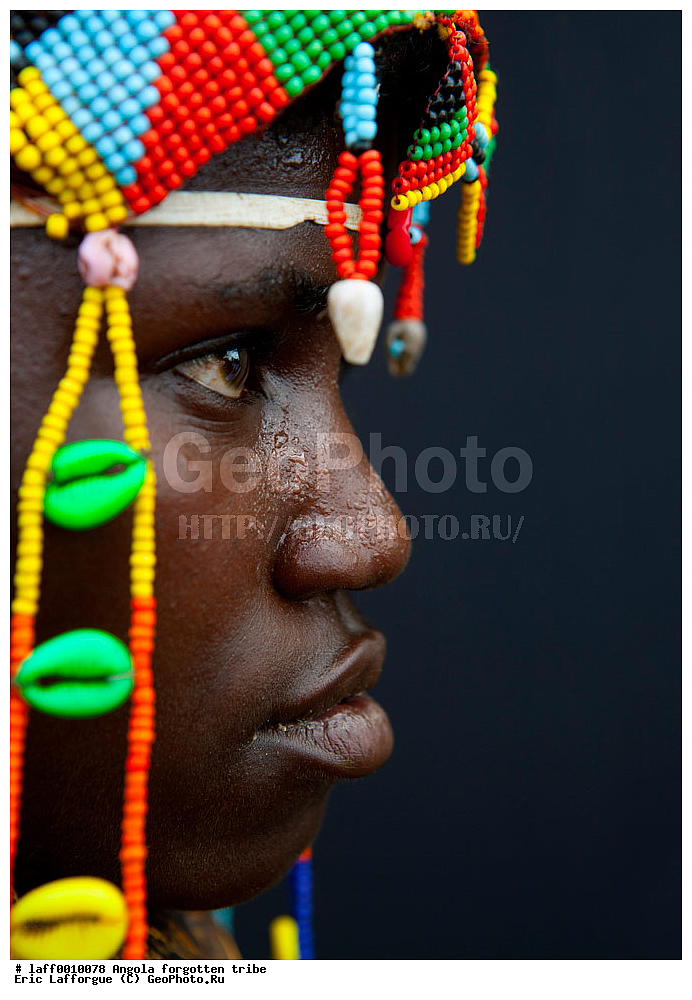
Дополнительная информация: Mwila people are an ethnic group living in southern Angola, in the area of Huila. They actually are part of the Nyaneka, a larger ethnic group. According to their oral tradition, they settled down in that area during the 17th century, because of a drought that made them abandon their lands in the country of Quilengues. In fact it seems Mwila are supposed to be a miscegenation of Jaga invaders, coming from east (and who transitorily invaded Congo) and conquered the area, with the aboriginal inhabitants of the area, the Chimbemba (or Bachimba). The conquerors formed the powerful kingdom of Huila during the 17th century, led by a Soba, which ruled the area until the first half of the 19th century. Mwila were part of this chiefdom and most of the traditions of these bantu cattle farmers date back to these times, although it is not clear for them nowadays. Mumuhuila rarely eat meat, they rather eat porridge, corn, chicken, honey and milk. They kill their cattle only on special occasions. Mwila are not allowed to mention people’s name in public. But Mumuhuila women are especially famous for their very special hairstyles. Indeed hairstyles are very important and meaningful in Mwila culture. Women coat their hair with a red paste called, oncula, which is made of crushed red stone. They also put a mix of oil, crushed tree bark, dried cow dung and herbs on their hair. Besides they decorate their hair with beads, cauri shells (real or plastic ones) and even dried food. Having their forehead shaved is considered as a sign of beauty. The plaits, which look like dreadlocks, are called nontombi and have a precise meaning. Women or girls usually have four or six nontombi, but when they only have three it means that someone died in their family. Mumuhuila Women are also famous for their mud necklaces, which are important as for each period of their life corresponds a specific type of necklace. When they are young, girls wear heavy red necklaces, made with beads covered with a mix of soil and latex. Later girls start to wear a set of yellow necklaces called, Vikeka, made of wicker covered with earth. They keep it until their wedding, which can last 4 years. Once married they start to wear a set of stacked up bead necklaces, called Vilanda. Women never take their necklace off and have to sleep with it. They also use headrests to protect their hairstyles. However, more and more men and women dress in a western way, because people use to make fun of them when they go to markets. Living conditions are tough as women sometimes walk for 50 kilometers to reach Huila market to sell goods.


 Показать в высоком разрешении