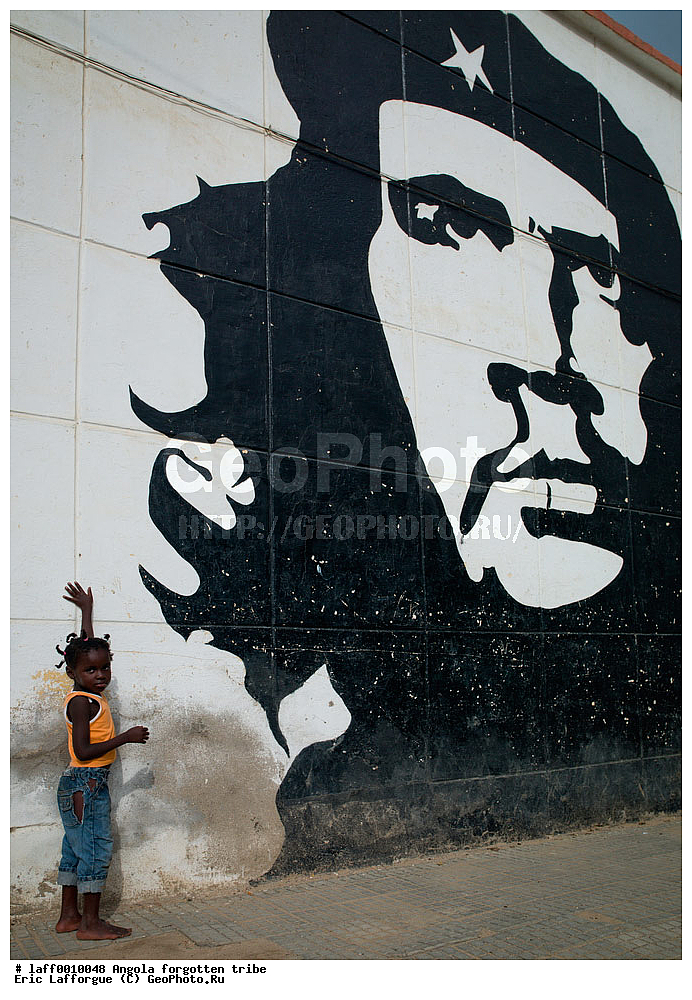
Дополнительная информация: In December 1956, in Portuguese Angola the Angolan Communist Party (PCA) merged with the Party of the United Struggle for Africans in Angola (PLUA) to form the People's Movement for the Liberation of Angola with Viriato da Cruz, the President of the PCA, as Secretary General. During 1975, before the official Portuguese withdrawal, the civil war in Angola intensifies. In fighting for control of the capital city, Luanda, the MPLA succeeds in driving out both its rivals. UNITA, which claims to enjoy wider popular support than the other groups, argues that Portugal must fulfil its last colonial duty and supervise elections. But the Portuguese, eager to leave as quickly as possible, abandon the country without formally handing over control to any succeeding government. The MPLA, in possession of the capital and with guaranteed support from the USSR and Cuba, declared itself the government of independent Angola. Agostinho Neto, a distinguished poet who had led the MPLA since 1962, became president. The Soviet Union supported the MPLA-PT as a liberation movement before independence and formalized its relationship with the MPLAPT government through the Treaty of Friendship and Cooperation and a series of military agreements beginning in 1975. Once it became clear that the MPLA-PT could, with Cuban support, remain in power, the Soviet Union provided economic and technical assistance and granted Angola most-favored-nation status. In 1976 MPLA adopted Marxism-Leninism as the party ideology. It maintained close ties with the Soviet Union and the Communist bloc, establishing socialist economic policies and a one-party state. For the first decade after independence, trade with communist states was not significant, but in the late 1980s dos Santos sought expanded economic ties with the Soviet Union, China, and Czechoslovakia and other nations of Eastern Europe as the MPLA-PT attempted to diversify its economic relations and reduce its dependence on the West. In October 1986, Angola signed a cooperative agreement with the Council for Mutual Economic Assistance (Comecon), a consortium dedicated to economic cooperation among the Soviet Union and its allies. As part of the Comecon agreement, Soviet support for Angolan educational and training programs was increased. In 1987 approximately 1,800 Angolan students attended institutions of higher education in the Soviet Union. The Soviet Union also provided about 100 lecturers to Agostinho Neto University in Luanda, and a variety of Soviet-sponsored training programs operated in Angola, most with Cuban instructors. Approximately 4,000 Angolans studied at the international school on Cuba's renowned Isle of Youth. More Angolan students were scheduled to attend the Union of Young Communists' School in Havana in 1989. Cuba's presence in Angola was more complex than it appeared to outsiders who viewed the Soviet Union's Third World clients as little more than surrogates for their powerful patron. The initiative in placing Cuban troops in Angola in the mid-1970s was taken by President Fidel Castr


 Показать в высоком разрешении