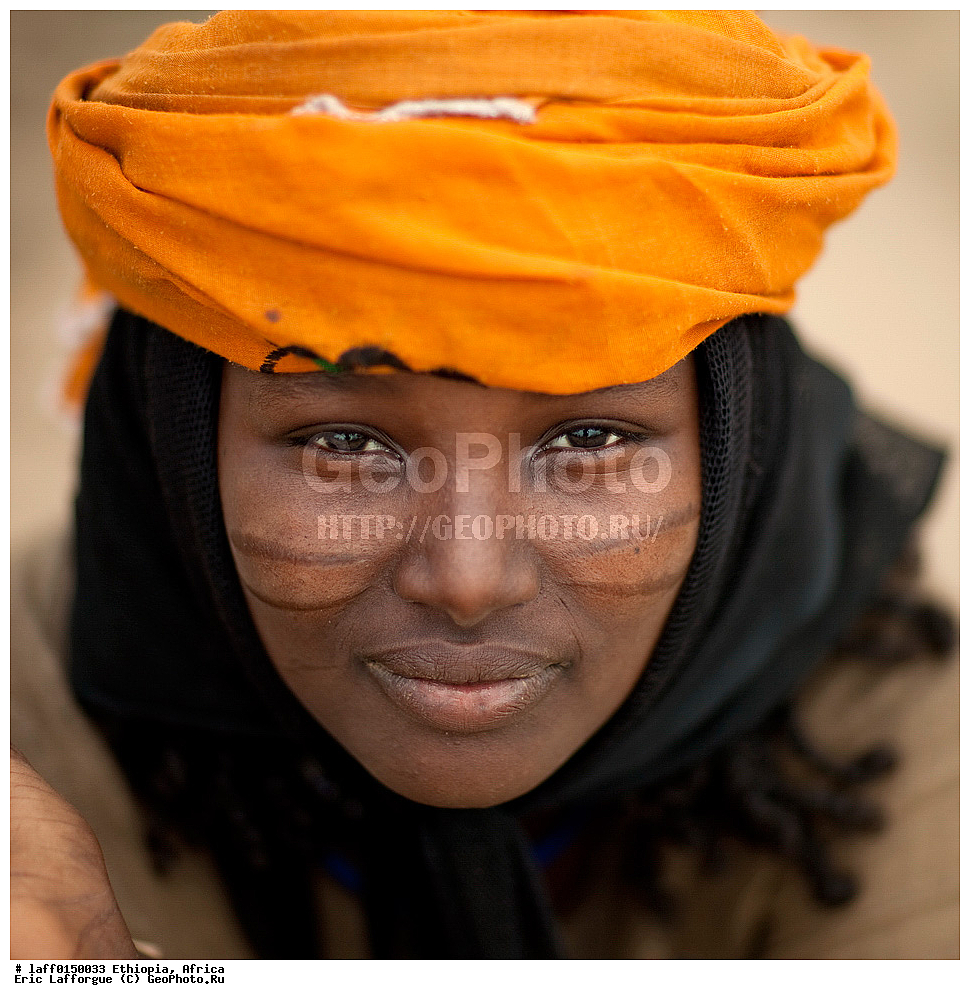
Дополнительная информация: The Karrayyu are a pastoralist tribe from Ethiopia living in the Awash Valley, around the volcano of Mount Fentale and the Metehara Plain. They belong to the larger ethnic group of the Oromos, who represent the majority (32 per cent) of the ethiopian population. It is said the Karrayyu arrived in the area 200 hundreds years ago, during the so called « great expansion », of the Oromo, during which Oromo settled in different parts of Ethiopia,. This led to cultural diversification. In spite of local differences between those subgroups, they share the same Cushistic language (Afaan Oromo) religion (Waaqeffata) and governance system (Gada). The Karrayyu are one of the last Oromo ethnic subgroups to follow these rules and to preserve the original Oromo lifestyle and culture, and its pastoralist way of life.There are only 10 000 to 55 000 Karrayyus (because of their nomadic lifestyle it is difficult to have precise figures) whereas they used to be 200 000 at the beginning of the 20th century. Karrayyu are on the verge of instinction. Such a drop was due to the persecutions the Oromos, including the Karrayyu people had to face during Menelik’s II reign (1889-1913). This emperor, from the Amhara ethnic group led the unification of Ethiopia, and imposed the Amhara rule to the Oromos. Later, during the 20th century, the Karrayyu were deprived of most of their lands because of the establishment of national parks and modern farms. In the last four decades, Karrayyu’s were dispossed from 70 per cent of their land, including their shrines, by the government to make sugar and cotton plantations.Conflict with neighbouring tribesStruggle for grazing lands and water resources is a constant and daily challenge for the Karrayyus. This results in conflicts with neighbouring tribes such as the Afar or the Argoba, but also with some other Oromos ethnic subgroups such as the Arsi Oromo. Clashes between herders from these tribes are pretty common, and sometimes people even get shot. Incidents occur about the possession or when some herders raid the cattle from another tribe. Last years these conflicts have intensified as the number of available grazing lands has cut down. Indeed, overgrazing (involved by the recent of growth of the area’s population) leads to soil erosion. The degradation of the rangelands intensifies the pratice of cattle raiding which is already deeply rooted in the culture of the tribes in this area. Some grazing lands have even been abandoned by the Karrayyus in fear of violent conflicts. Religion The traditional Karrayyu religion is Waaqeffata, which is a monotheistic religion based on belief in a supreme being called « Waaqa ». This religion is closely related to the natural world as the Oromo pray to Waaqa at sites believed to be particularly blessed. However Kaarrayyu are muslim. Their religion consists in a syncretism of and Waaqa. Islam is the religion of 40 per cent of the Oromo people, including the Karrayyus. Female genital cutting Unfortunately the Karrayyu are also famous for the female genital cu


 Показать в высоком разрешении